Fashioning the 'Cosmopolitan Diva'
Interview with Suchismita Chattopadhyay on how to become groomed for modernity
When you walk through Delhi’s new malls or cafés, it’s easy to see that style, confidence, and fluent English have become tickets to belonging. But these aren’t skills people are simply born with. They’re taught—carefully, and often at a price.
That’s where finishing schools come in. In one of them, young women learn how to sit, speak, smile, and even shop in ways that mark them as “cosmopolitan divas.”
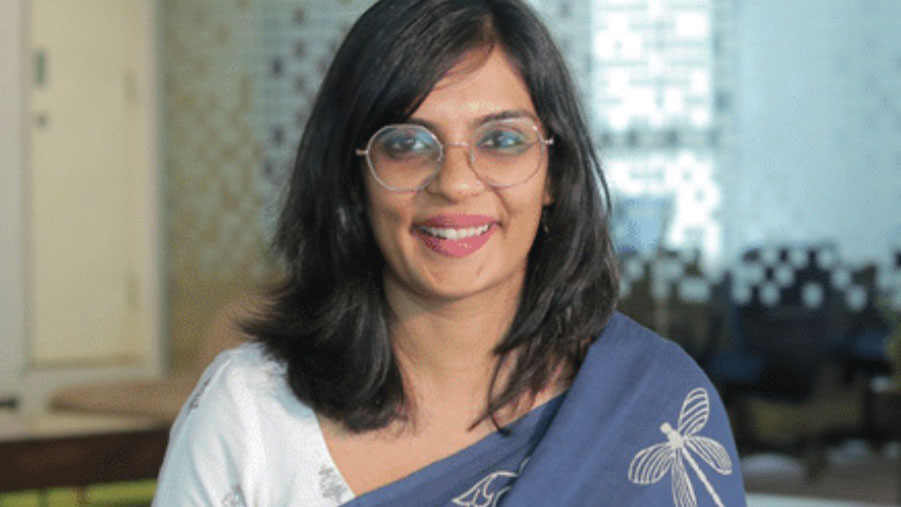
In this blog, we are delighted to share our interview with Dr. Suchismita Chattopadhyay from BML Munjal University, who was invited to our institute to give a lecture on her ethnographic research about Delhi’s grooming schools. As Dr. Chattopadhyay explained, these institutions may offer young women confidence and pleasure, yet they also quietly reproduce long-standing divides of caste and class.
Together, her insights and our conversation invite us to ask: what does it mean to “be modern” in Delhi today, and who gets to decide what that looks like?
How did you come to study the grooming industry and image consultants in Delhi?
Suchismita Chattopadhyay:
When I came to Delhi for my undergraduate and master’s studies around 2009, the city felt intimidating — a world away from my small hometown. I studied in an elite women’s college where privilege showed not only through academics, but also in how people dressed, spoke, and carried themselves. Around that time, India’s economic liberalization had transformed urban life: malls, restaurants, and new service jobs were emerging, often filled by workers from modest backgrounds who were expected to appear “professional” — fluent in English, confident, and stylish.
I realized they must be learning these behaviors somewhere. Beyond English classes, there were grooming and personality development institutes teaching etiquette, confidence, and even how to recommend wine and cheese. This led me to explore grooming as part of a broader shadow education industry — a space where both elites and the working class learn to fashion the “modern self.”
Will the grooming industry continue to thrive, or are forms of resistance beginning to appear?
Suchismita Chattopadhyay:
Grooming, in a broad sense, has always existed — families, schools, and workplaces constantly shape how we speak, act, and even think. What makes formal grooming schools distinct is their deliberate training in “professionalism” and soft skills.
In India, I believe these institutions will persist. Many young people lack access to elite education, and grooming schools fill that gap by promising employability — they teach that improving English, confidence, or body language leads to success. Within a neoliberal economy that emphasizes self-responsibility, self-improvement becomes a moral duty — even a survival strategy.
Yet, these schools rarely question structural inequalities. They suggest that hard work alone is enough, overlooking how caste, class, gender, and religion shape real opportunities. Some even teach students to be “balanced rebels,” encouraging negotiation rather than open resistance. For most students, however, refusal is not an option — grooming is a pragmatic hope in an unequal system.
In your work, you connect the performance of the “modern self” to class and caste. How does this connection appear in everyday life?
Suchismita Chattopadhyay:
Caste in India remains a deeply rooted social hierarchy. Historically, upper castes controlled education and professions, while lower castes were restricted to manual labor. Even today, upper castes — though a minority — dominate positions of influence in government, business, and academia.
Class and caste overlap closely. During colonial times, upper-caste Hindus were the first to receive English education and later retained those privileges after independence. When India’s economy liberalized in the 1990s, they again benefited first from the IT and corporate boom.
The idea of the modern professional self — fluent in English, confident, and well-dressed — reflects this upper-caste, upper-class aesthetic. Grooming schools teach others to emulate this ideal, but seldom question who defines it or why it carries value. Even notions of “tasteful” dress or “neutral” English are rooted in these hierarchies: muted colors and western suits signify refinement, while more expressive or traditional styles are often dismissed as unprofessional.
In this way, grooming industries reproduce the aesthetic and linguistic ideals of upper-caste modernity, shaping how people learn to appear “global” and “successful.”
Could you explain what you mean by “globally familiar”?
Suchismita Chattopadhyay:
The term globally familiar comes from my PhD research, inspired by Gabriel Dattatreyan’s work on hip-hop in Delhi. It describes how individuals groom themselves to appear legible and recognizable across cultures — through their dress, language, and manners. It’s about producing a sense of global recognition, where someone feels “modern” rather than local or vernacular.
Just as hip-hop rhythms are instantly recognizable worldwide, so are certain forms of corporate English, dress, and behavior. Grooming schools train people to embody these global codes — to look cosmopolitan, mobile, and modern, no matter their social background.
Finally, what advice would you give to researchers studying body aesthetics and inequality in South Asia?
Suchismita Chattopadhyay:
Practically speaking, if you are doing ethnography, keep separate phones and social media accounts for fieldwork. Clear boundaries help maintain distance between personal and research lives.
Academically, there is still much to explore. The study of body aesthetics and inequality in South Asia has wide gaps — especially in understanding how beauty, professionalism, and taste intersect with caste, class, and gender, and how people navigate these pressures through everyday bodily practices. Much of academic theory still takes the Global North as its reference point. Yet the Global South — across Asia, Africa, and Latin America — holds immense theoretical potential. In my own research, I use the concept of aesthetic labor. In Western scholarship, it often refers to how workers embody a company’s brand image — for instance, employees at Abercrombie & Fitch or Zara. The body becomes a site of profit.
In India, however, I expand this idea. Aesthetic labor is not only about employability or profit; it also involves pleasure and self-expression. For many women, grooming provides joy, confidence, and access to new social spaces. Dressing up or preparing to enter urban environments can itself be empowering.
So, while grooming schools may appear apolitical, we must not overlook the emotional and social dimensions of aesthetic practices. More broadly, it is time for theory to emerge from the Global South — not as an object of study, but as a producer of concepts and frameworks that reshape how we understand aesthetics, labor, and identity.
About Dr. Suchismita Chattopadhyay
Dr. Suchismita Chattopadhyay is an Assistant Professor at the School of Liberal Studies, BML Munjal University (Delhi NCR). She holds a BA in Political Science from Lady Shri Ram College (Delhi University, 2009), an MA in Political Studies from Jawaharlal Nehru University (2011), and a PhD in Anthropology and Sociology from the Graduate Institute of International and Development Studies in Geneva (2022).
Her research lies at the intersection of political sociology and anthropology, with a focus on neoliberal configurations of the self, immaterial labour, and urban transformations. She is particularly known for her ethnographic work on Delhi’s grooming and self-improvement industries. Her broader academic interests include body politics, gender, youth culture, and the anthropology of the state.