On Freedom and Madness
Psychiatry, care and affective territories in the Swiss Alps - An Interview with Paola Juan

What does freedom mean inside a psychiatric institution?
Can care exist without forms of constraint?
And how do ideas of “good” psychiatric care change over time?
These questions lie at the heart of Paola Juan’s ethnographic research on psychiatry, care, and affective life in a rural region of the Swiss Alps. Based on long-term fieldwork at the Wassattiv psychiatric hospital, known for its “humanistic” open-door philosophy, including living and working at its art centre, her research explores the tensions between freedom and confinement, institutional care and community life, and the emotional worlds that emerge within psychiatric spaces.
Switzerland has a rich but potentially overlooked history of psychiatry. The diagnosis of schizophrenia was first coined by Swiss psychiatrist Eugen Bleuler in the early 20th century, and psychiatric institutions have profoundly shaped ideas of care, normality, and belonging (Hoff 2012). Juan’s engagement with this history is both academic and personal: her interest in psychiatry was also influenced by her sister’s psychiatric hospitalization and diagnosis, an experience that participated in shaping the questions she brought to the field (Juan 2025; Juan 2026a & b).
Ahead of her guest lecture at ISEK as part of the Spring Semester 2026 Lecture Series, we spoke with Paola Juan about her research, particularly how freedom can emerge, or disappear, within institutions built around care and control. In the blog that follows, we share some of the key insights from our conversation.
If you had the freedom to design an “ideal”, even utopian psychiatric institution what would it look like?
Paola Juan:
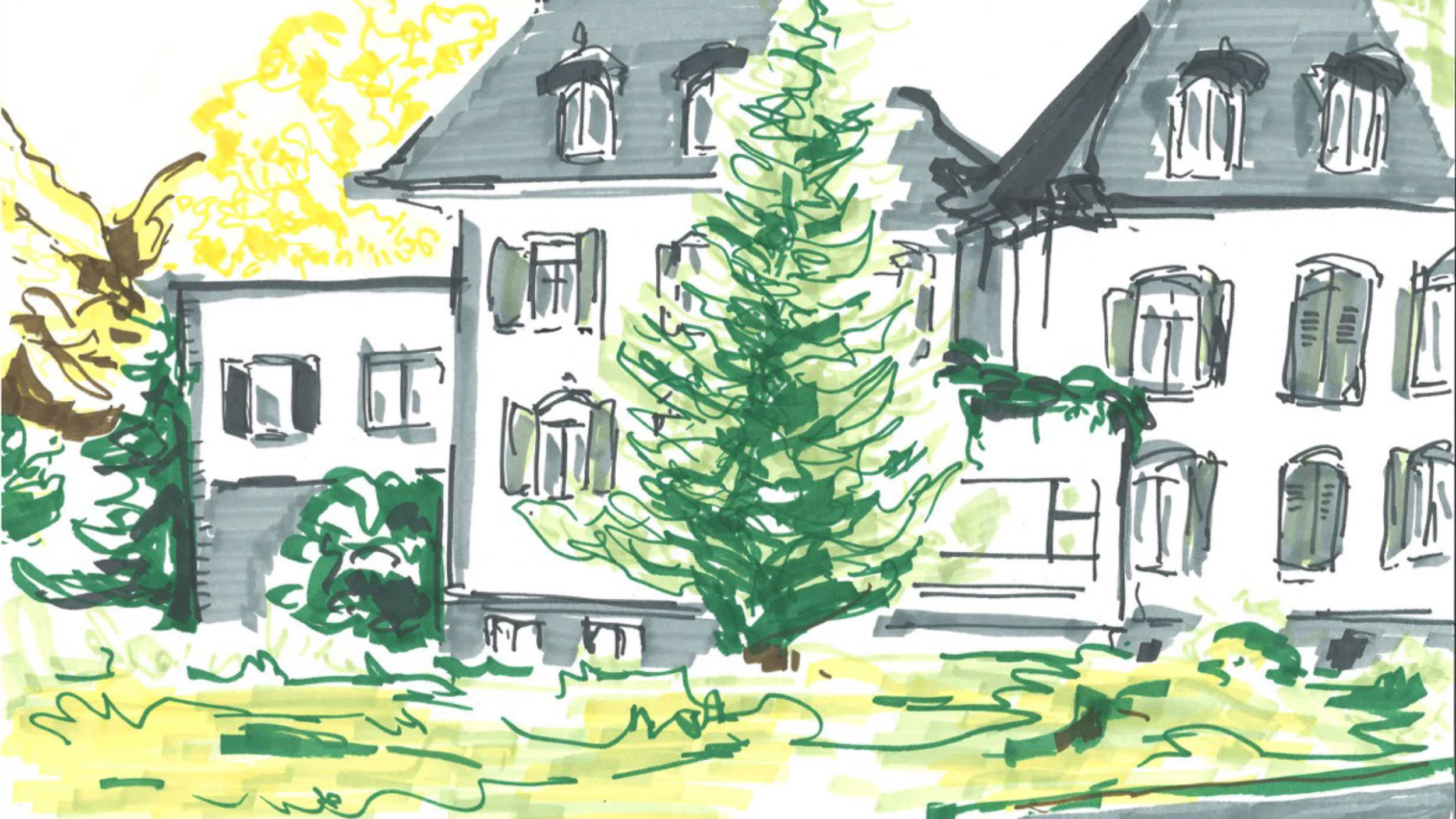
“The idea of an ideal psychiatric institution is complex because ideas of what is therapeutic change over time. Psychiatric architecture has always reflected shifting visions of care. The hospital I studied, for example, used a ‘cottage system’ of separate houses rather than a single asylum – initially inspired by Geel, Belgium, where people with psychological vulnerabilities lived with foster families. In the 19th century, this was seen as a more humanistic alternative to the asylum model.
Since the deinstitutionalization movements of the 1960s, psychiatry has increasingly questioned the therapeutic reasoning behind psychiatric hospitals, leading to community-based and ambulatory care. My research showed that people often understood good care in terms of freedom, emancipation, and minimizing restraint in its many forms. Rather than proposing one ideal model, I am interested in what good care means to people themselves, shaped by their own experiences and positionalities.”
In your work you speak of the “writing with hope” methodology, could you perhaps elaborate on this and explain how this method helped you with the emotional weight of your research, the injustices and the suffering you might have encountered?
Paola Juan:
“For me, ‘writing with hope’ is an ethical commitment. In recovery-oriented mental health care, hope is essential: without it, recovery is impossible. I began my research focused on the inequalities and violence within psychiatric systems, but I came to question the effects of writing solely through critique, not only for my interlocutors, but also in relation to the stigma surrounding mental health. I became interested in acknowledging what is not working while also imagining more humane alternatives. It is not about ignoring injustice, but recognizing efforts to create better forms of care.
{…}
During fieldwork, I also learned the importance of having spaces of retreat. Knowing I could step away when the work became emotionally complex or difficult, and relying on support outside the field, was essential.”
Conclusion
Paola Juan’s work invites us to rethink psychiatry beyond the binaries of care and control or freedom and confinement. Her ethnographic research shows that psychiatric institutions are shaped by histories, relationships, affects, and evolving ideas of what constitutes “good care.” By foregrounding hope, alternative forms of care, and everyday experience, she raises important questions about dignity, autonomy, and society’s response to psychological vulnerability.
At a time of ongoing change in mental health care across Europe, Juan’s research reminds us that psychiatry is not only a medical issue, but also a profoundly social, political, and human one.
About Paola Juan
Paola Juan holds a BA in Anthropology and History and Sciences of Religions from the University of Neuchâtel and an MSc in Social Anthropology from the London School of Economics and Political Science, where her master’s thesis received the Maurice Freedman Prize (2017/18) for the best dissertation in the MSc in Social Anthropology. She is currently completing her PhD at the Faculty of Social and Political Sciences at the University of Lausanne.
At the ISEK, Juan is pursuing postdoctoral research in medical anthropology, focusing on intergenerational care practices, alternative psychiatric services, and religious traditions in Geel, a Belgian town internationally known for its long history of community-based psychiatric care (ISEK 2023).
Bibliography
Hoff, Paul. 2012. “Eugen Bleuler’S Concept of Schizophrenia and Its Relevance to Present-Day Psychiatry.” Neuropsychobiology 66 (1): 6–13. https://doi.org/10.1159/000337174
ISEK . 2023. “Paola Juan.” Isek.uzh.ch. 2023. https://www.isek.uzh.ch/en/anthropology/about/people/staff/J/paolajuan.html
Juan, Paola. 2026a. “Approaching Psychiatry and Psychological Vulnerability in Switzerland. Ethics, Positionality, and Methods.” Chapter 1 of On Freedom and Madness: Affects, psychiatry and territories in the Swiss Alps. Unpublished PhD dissertation. Université de Lausanne.
Juan, Paola. 2026b. “Wassattiv psychiatric Hospital. Poetics and Politics of a Heterotopic Space.” Chapter 2 of On Freedom and Madness: Affects, psychiatry and territories in the Swiss Alps. Unpublished PhD dissertation. Université de Lausanne.
Further reading for those interested:
Juan, Paola. 2025. “Unveiling Vulnerability.” Swiss Journal of Sociocultural Anthropology 31 (1): 58–72. https://doi.org/10.36950/sjsca.2025.31.10751