Child-Sensitive Social Protection in Amazonia
Rethinking CSSP Beyond Consumption and Relative Poverty - Interview with Thaís de Carvalho
In recent years, child-sensitive social protection (CSSP) programmes, including free school meals, conditional cash transfers, early-childhood monitoring, and related interventions, have become central pillars of global development policy. Their promise is compelling: invest in children today to improve wellbeing and reduce poverty in the long term. These programmes play crucial role’s in supporting families’ immediate needs, often preventing hunger and providing essential stability.
At the same time, scholars have highlighted that while CSSP offers important benefits, it cannot on its own address the deeper structural forces that create and sustain poverty. Issues such as extractive economic models, structural violence, and enduring colonial legacies continue to shape everyday life for Indigenous communities in Amazonia. From this perspective, the question is not whether CSSP is necessary - it clearly is - but how it can be strengthened so that it supports communities more effectively and avoids unintended harm.
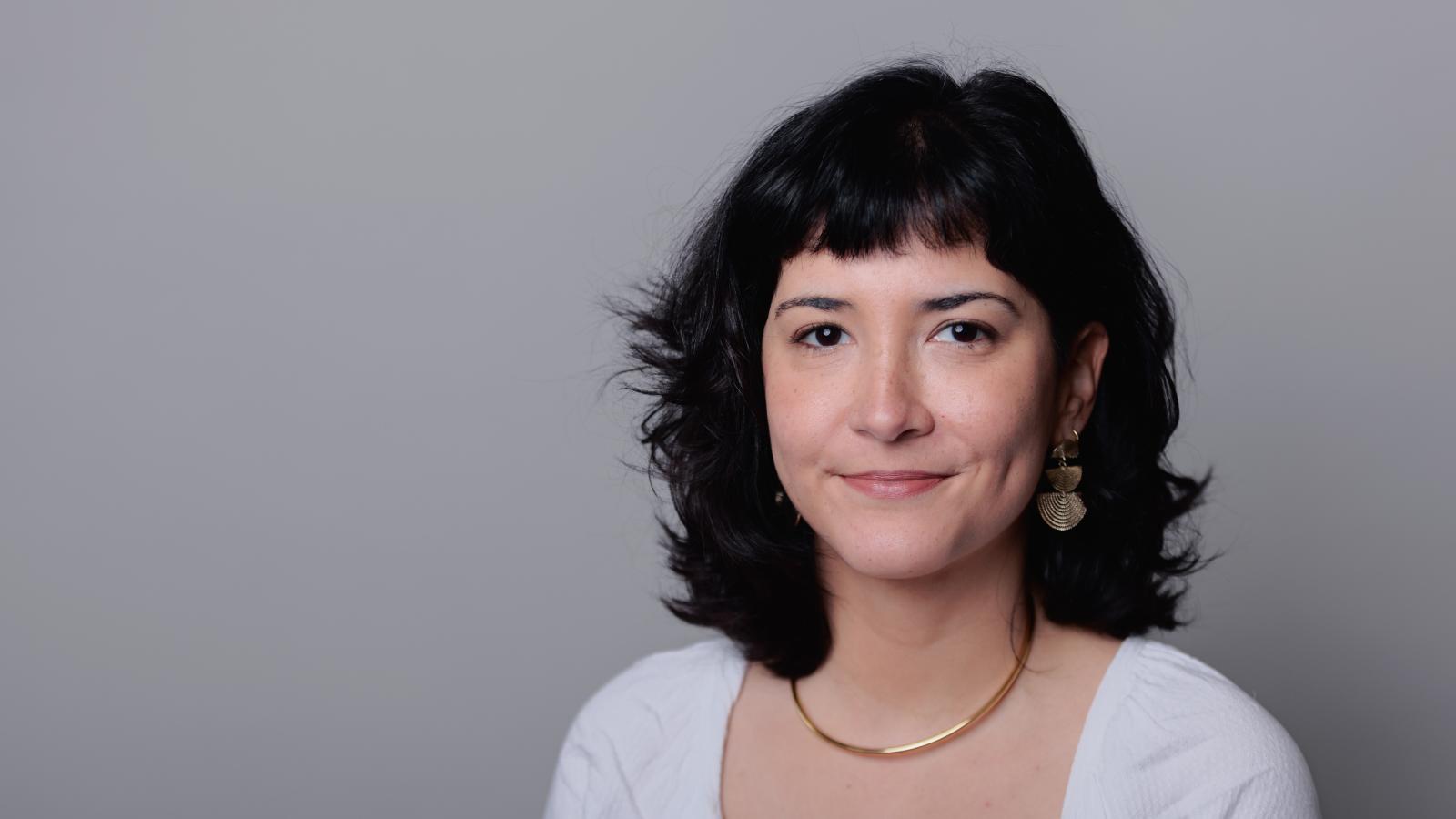
These complexities lie at the centre of the work of Thaís de Carvalho, whose ethnographic research in Amazonia examines not only what CSSP achieves, but also what falls outside its reach. Originally trained in social communication and now a Lecturer in Sustainability and Development at SOAS, de Carvalho brings an interdisciplinary lens to understanding the politics, practical challenges, and lived experiences surrounding social protection.
In this blog, we are delighted to share insights from our conversation with Thaís de Carvalho following her recent lecture at our institute on child-sensitive social protection in Amazonia. Far from advocating the withdrawal of welfare support, her work invites a more careful, grounded, and community-centred question: How can we make welfare better for everyone?
What would you do if you were president of Amazonia?
Thaís de Carvalho:
I’d never survive as a politician - I’m not cutthroat enough. But if I had to answer {…} our biggest problem is the lack of long-term thinking. Extraction brings wealth for a few, but its costs are intergenerational. Some countries plan for that, Norway being the global exception, but most countries don’t. I don't think this is a huge discussion in Latin America to begin with, so people profit now, and they benefit now, but then you have the consequences both from what you got used to as a standard of living and also from general environmental disasters that happen as a consequence of that.
{…}
My vision of the world that I would like to build, is a world where everyone is doing well, not necessarily by monetary terms, but that they are pursuing a life that is fulfilling and that they are meeting their basic needs. Our current development model simply doesn’t deliver that. For some people this is quite a radical view.
To what extent do you see CSSP being used as a political tool - something that shows visible action without challenging structural inequities or extractive logics?
Thaís de Carvalho:
People think CSSP, like Brazil’s Bolsa Família, is a left-wing policy. But at its core it’s very neoliberal: it’s about developing ‘human capital.’ The model commonly published by the Bank promotes inclusion in the consumer market but does not transform inequalities. It doesn’t address quality of education, structural inequality, or harmful labor conditions. It compensates - it doesn’t transform.
{…}
Children go to school, technically, they're developing their human capital, so it's a future investment. That's the way that it's lobbied within Congress. I don't find it particularly true, because in all cases it depends so highly, such as the level of education that you're provided. If you just go into school, it doesn't necessarily mean you're getting a good education.
But it is a step; I always recognize it as a step, as a kind of compensation, as a kind of support for families who couldn't afford to not send their children to hazardous labor otherwise. So, there is a reason why it's seen as a progressive policy. But I feel like there's a long way to go for it to becoming a progressive policy.
Do you think CSSP reflects a vision of ‘children of the future’?
Thaís de Carvalho:
It’s a lot to place on children’s shoulders. Being a child is already hard enough, and yet we treat them almost like investments: future workers, future taxpayers. But we, as adults and previous generations, created the situation we’re in. It’s too heavy a burden to hand over to younger generations while pretending the real responsibility isn’t ours. We like to say, ‘children are the future,’ but we’re the ones making harmful decisions in the present.
{…}
I think this is the challenge with CSSP, it’s what I was getting at with the bandage-and-bullet-wound metaphor. Addressing surface-level needs alone doesn’t transform the underlying conditions. It may offer temporary relief, but the deeper processes remain unchanged, and the cycle simply begins again.
Conclusion
Child-sensitive social protection plays an indispensable role in supporting families, often providing the stability and nutrition children need to simply get through the day. Yet, as Dr de Carvalho’s work reminds us, essential relief is only one part of the story. CSSP cannot compensate for the deeper structures that threaten children’s wellbeing: deforestation, dispossession, inequitable schooling, and the long-term erosion of Indigenous livelihoods and futures.
Recognising the value of these programmes does not mean overlooking their limits. Rather, it encourages a more honest conversation about how to strengthen them. Protecting children requires more than treating them as investments in a distant future; it requires confronting and transforming the systems that harm them in the present.
Only through this dual approach, meeting immediate needs while addressing structural injustice, can social protection evolve from mitigating wounds to helping communities truly heal. And while compensation for resource loss may be necessary, we must continue asking the harder question: Why was that loss permitted, and was it ever justifiable in the first place?
About Dr. Thaís de Carvalho
Dr. Thaís de Carvalho is Lecturer in Sustainability and Development at the SOAS Centre for Development, Environment and Policy (CeDEP) in London. She holds a BA in Social Communication from the Universidade Federal do Rio de Janeiro, an MA Social Communication and Anthropology from the Pontifícia Universidade Católica do Rio de Janeiro, and a PhD in International Development from the University of East Anglia.
Her research reimagines social protection in ways that confront both poverty and climate change while authentically meeting the needs and aspirations of Indigenous peoples. She examines how uneven development, climate impacts, and colonial legacies shape the livelihoods and futures of Indigenous youth in Amazonia, and how policy could respond more meaningfully.
Beyond academia, de Carvalho has worked extensively as a consultant on social protection and Indigenous rights for FAO, UNICEF, the Asian Development Bank, and other international organisations.
Further reading for those interested:
De Carvalho, Thaís. 2024. "Integrating Environmental Justice Into Child-Sensitive Social Protection: The Environmental Roots of Intergenerational Poverty in Amazonia". The European Journal of Development Research 37 (1): 79–99. https://doi.org/10.1057/s41287-024-00657-6
De Carvalho, Thaís. 2025 (in press). Saving Indigenous Children? The Government of Childhood and the Coloniality of Development in Amazonia. Milton Keynes: The Open University. Manuscript in press.