Environmental Violence in Palestine
Exchanges with Mikko Joronen about ethics and violence in fieldwork and in politics
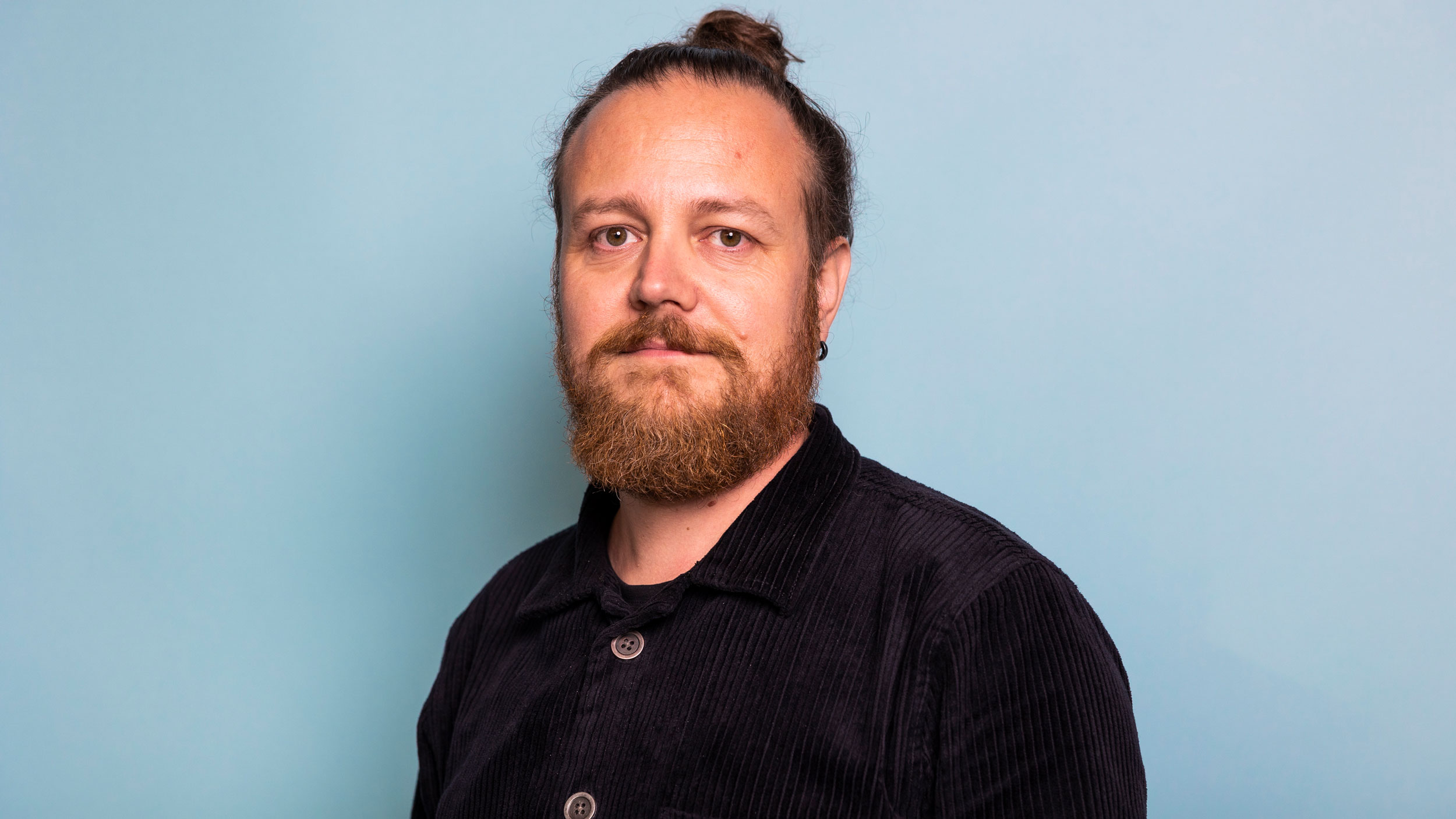
On the 12th of May 2026 the ISEK had the honor of welcoming Mikko Joronen from the Tampere University in Finland as part of the Lecture Series in Social Anthropology. We met Mikko Joronen during a seminar on fieldwork in conflict zones and later during his lecture. For approximately fifteen years, Mikko Joronen has conducted research in Palestine and Israel, focusing on questions of violence, vulnerability, displacement, and everyday life under conditions of conflict. In the first place he dedicated his research to this topic, because he wanted to show complex realities of people, which is not that well documented. Today his interest also lies in his connection to these people.
The day at the university began with a seminar dedicated to the practical and ethical challenges of conducting fieldwork in conflict zones. Drawing on his own experiences in Palestine, Joronen discussed the difficulties of gaining access to research sites in unstable political contexts. Throughout his work, collaboration with local researchers, assistants, and community members has therefore been essential. A particularly engaging part of the seminar focused on the ethical responsibilities of researchers working with people affected by war and extreme violence. Joronen explained how research methods must often be adapted to avoid exposing participants to additional risks or retraumatization. Rather than asking direct questions about experiences of violence, conversations sometimes begin with seemingly ordinary topics such as cooking, housing, or everyday infrastructure, allowing participants to decide themselves how much they wish to share. Another key method involves observing physical reactions: during olive-picking fieldwork, Joronen used body mapping and follow-up interviews to analyze how the surrounding hostility, expressed through tense body language and loud music, became physically internalized. The discussion also addressed the reserchers positionality: being seen as insider or outsider shapes the knowledge one can access. The seminar concluded with an open discussion on academic freedom, political pressures, and the responsibilities researchers carry when representing the experiences of vulnerable communities. (Joronen 2026a)
In the afternoon, Joronen delivered a lecture entitled Environmental Violence in Palestine, presenting a thought-provoking analysis of how violence operates through environmental and atmospheric processes. Rather than viewing air, weather, pollution, and fire merely as background conditions, he demonstrated how they can become active instruments of power and domination. Among the examples discussed was the use of so-called “skunk water”, a foul-smelling liquid deployed against Palestinian communities. Joronen showed how its effects extend far beyond the immediate moment of exposure. The smell lingers in homes, on clothing, and throughout neighbourhoods, producing humiliation, social isolation, and long-lasting forms of embodied violence. He also examined how fire, pollution, smoke, and environmental destruction can function as tools of territorial control and spatial transformation. Throughout, Joronen highlighted how violence can be experienced not only through direct force but also through the gradual transformation of ones environment. (Joronen 2026b)
The visit offered a valuable opportunity to engage with debates on conflict, colonialism, environmental violence and research ethics. We thank Mikko Joronen for sharing his expertise and for a interesting day at ISEK.
Sources
Joronen, Mikko. 2026a. “Fieldwork in conflict, dangerous settings.” Seminar. 12.05.2026.
Joronen, Mikko. 2026b. “Lecture Series in Social Anthropology Spring Semester 2026.” Lecture. 12.05.2026.
Tampere University. n.d. “Mikko Joronen.” Tampere University. Accessed on 10.06. 2026. https://www.tuni.fi/en/people/mikko-joronen.