On Feeding the Future
An interview with Edmée Ballif on child nutrition and reproductive imaginaries in Switzerland
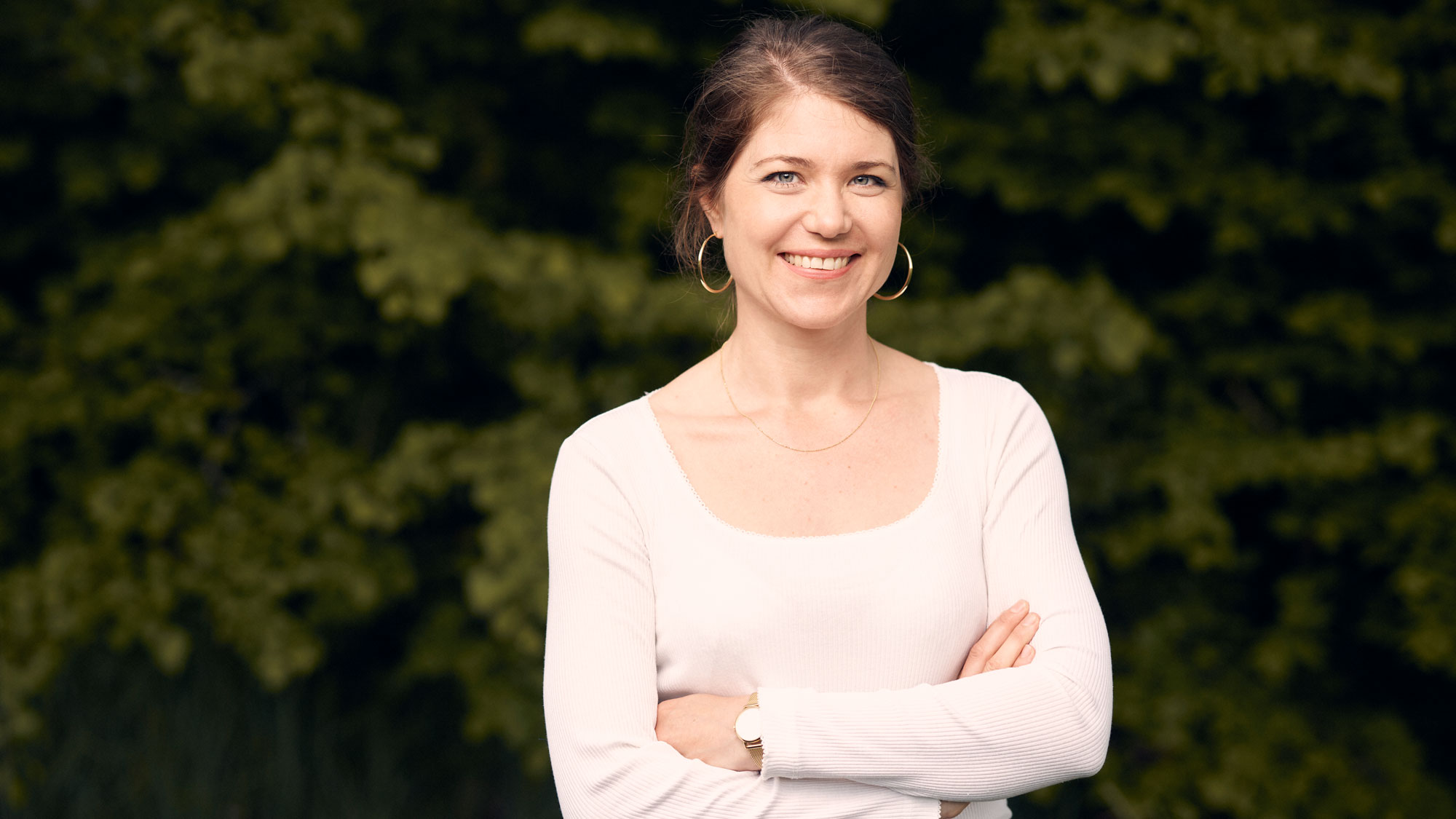
First of all, thank you for accepting the invitation for the interview. The first question is, if we replace milk with other foods, would this debate still exist? Does milk hold a particular symbolic value?
Edmée Ballif:
I think it does hold a particular symbolic value, at least in countries like the US, some Nordic countries, Switzerland, and France, where there is a long history of consuming milk, transforming milk into cheese, cream, etc. And if you look more globally, in many places where milk is consumed, it also holds many different layers of values and meanings.
I'm thinking of Janet Carsten’s work, The Heat of the Hearth, about food and kinship, and how sharing food and eating together was a way to make kinship and social ties. In many cultures, if babies are breastfed by the same mother, they are considered siblings, even without shared biological parents, because sharing human milk creates a bond. In many contexts, milk has a symbiotic value. And because it's so special as a substance that is being produced by human bodies, I don't think there are other substances like that.
It's interesting to me that milk is not the only food being discussed and contested, but it does draw on a whole history of milk in the traditional way of life. And I don't think you have these same meanings being discussed about sugar, for example.
You mentioned that maybe in other Western countries like the US, there are similar debates on milk. But in my country, China, milk is widely promoted. Everyone says that milk is good for people's health and children should drink more milk because it contains Calcium and high protein. So do you think the issue of milk could ignite similar cultural or political conflicts in other contexts, or this issue is particularly complex in Switzerland and others like European countries or the US?
Edmée Ballif:
I think it's different. I don't know the direction it will take in China, but I think one thing that is very interesting and different is that, in Switzerland, drinking milk is associated with tradition, with the way that our ancestors, our grandparents used to live. And the debate is, to put it simply, should we continue because that was the good way of life, or should we change? Because actually it's not good for the environment, it's cruel to animals, etc. So it's a debate between milk as part of tradition and modernity.
From what I know, and in other Asian countries, in Vietnam for example, milk is being imported as a type of food that is being promoted but was not necessarily part of how ancestors used to live. In that context, milk is modernity, milk is new. Milk is explicitly promoted as a way to modernize the country, to have a healthier and taller population. I don't know if that's the discussion in China, but the idea is if you drink milk, you're going to be taller, and the imaginary behind that is being tall is good. Being tall is associated with European. So you have a whole racial imaginary behind, that maybe “Asia is behind Europe” economically. There's this idea that to reach the same level, you have to be tall as well. And you have to drink milk. So it is very different in that way.
I think some people don't drink milk because they are not lactose-tolerant. But I haven't heard that some people don't drink milk because it's not the traditional way of life. And that's interesting.
You mentioned that liquid milk consumption has decreased, but cheese consumption has risen. I wonder, if milk is processed, for example, converted to cheese or other products, how do you interpret this trend? Are there similar health concerns or cultural conflicts surrounding cheese in schools, or it is generally more accepted?
Edmée Ballif:
There is no cheese day in Swiss schools :) Usually what they give children during school milk day is milk with strawberry or chocolate flavor, which means there's sugar added. And that's of course something that some people criticize. This is absolutely even less healthy, because children don't need more sugar, but it is very much in liquid milk.
Cheese is also very fashionable in the sense that, internationally—and especially in the US and the UK—cheese is associated with high cuisine, fine gastronomy, and high-end luxury lifestyle. In Switzerland, cheese has always been a very common food. It's the food of farmers. But because it has been coded as high-end in other places, it influences and encourages people to keep on trying new kinds of cheeses and serving them as quality food. It is also quite expensive, much more expensive than liquid milk. So that probably also drives a trend that cheese is considered as a kind of almost luxury food.
In a nutritional sense, some will consider cheese as fat. In comparison with milk, cheese is much fattier and saltier, because it's concentrated. In a way, if you already think cow's milk is not healthy, cheese is much worse. It's not uncontested, but clearly it's not the same. There is not a controversy like there is for liquid milk.
You mentioned in the talk that plant-based milk is influenced by financial interests and even the dairy industry is investing in this kind of alternative. Does this suggest that the milk war is primarily a commercial competition rather than an ideological conflict? And how do you perceive the tension between food sustainability and economic power?
Edmée Ballif:
That's a good question. I think the answer is complex as often. When we talk about plant milk, some people look at it with commercial interest. It's increasingly popular, and people are buying it. It makes sense that some dairy companies would invest in that, just in the same way that cigarette makers started investing in e-cigarettes. You want to have your own competition in house because you then control a bigger segment of the market, right?
Some others however have a very moral investment in milk. For example, if you look at vegan associations, I have looked at those discourses and compared the US and Switzerland. Cow's milk is associated with animal suffering and pollution. In contrast, their argument is that plant milk is better in every way. However, they are also not talking about the fact that plant milk is also much more expensive. It's only an option if you have a privileged social and economic position.
As for the tension between food sustainability and economic power, it's also a very tricky question, because usually plant milk is presented as a green alternative to dairy. But dairy industry also says that some plant milk also has a huge ecological impact because, for example, soy needs a lot of water. If you take the Swiss example, soy and oats are being produced in Switzerland, but in very small quantities. You can find local plant milk, but the production is very small and it's expensive. Most plant milk is imported, and that raises the whole question of its ecological impact, because it’s liquid, it's heavy, meaning a lot of fuel to transport it.
Therefore, it's very tricky when plant milk is simply presented as a better alternative. It really depends on which indicators you take into account: which plant milk, and where it is from. Some plant milk like soy can be local in many places in the world, so it's a much more sustainable option there than it would be in Switzerland. But very often these discourses on milk are very general. If you want to assess sustainability, you have to look locally and look into specific context.
That's really a complex issue, and the answer varies from country to country. As for the role of science, both proponents and opponents of milk use some scientific evidence to support their ideas. How do you view the use of scientific discourse in this debate?
Edmée Ballif:
In general, science is very often the highest authority in many things. And that has been the case since the modern disciplines have been grounded, at least in the industrial revolution in Europe. You have this idea that science is driving progress and for the world to be better, we need to follow science.
In the case of food, nutrition is the science that is leading the way, which emerged as the science of authority at the beginning of the 20th century, as a kind of subdiscipline that focuses on food, and the relationship between food and health. In many places, and me growing up in Switzerland, I have been taught the differences between starchy food, protein, sugar, calories, thinking about vitamins, calcium, thinking about molecules that are in the food you eat. This is the classification system that has been promoted by nutrition, pushed globally and influencing global food programs or discussions of food.
But within nutrition, you have debates and you have people who disagree, as the case with every science. In the case of milk, if you look at publications in nutrition journals, you can find things that are contradictory. For example, some will say that milk is a very good source of Calcium. Some others will say, the body cannot assimilate calcium in milk properly, because there are other substances in milk that prevent that. Then the question is which sources you listen to and take as more reliable than others.
And the last thing to say is that science is not neutral. Science is not outside of society. Researchers can be influenced by their surroundings and sometimes very directly because many studies on milk are being paid for by lobbies. The dairy industry is funding a lot of research. So it takes very detailed scientific skills if you want to have an opinion on these articles, because you have to look carefully at who is paying, who the researchers are, if they have an interest in the debate, and how they do the research. Almost only scientists and journalists can have that level of detailed understanding. It's quite difficult for a normal person to understand which source to look at. So that's a complicated part of trying to look at scientific evidence of milk.
That's true. In many cases science is not so neutral. The last question is about parents. The main focus of your study, I think, is on the school nutrition plan, but I'd like to know more about the role that parents play. Do you think in Switzerland, parents experience strong societal or governmental pressure regarding dairy consumption and children's dietary education? What responsibilities should families and schools have?
Edmée Ballif:
I think in Switzerland, there is a strong pressure to include dairy in children's diets. It is part of the food pyramid. It is part of every food guideline that I have found for children. For example, Swiss Pediatrics, and the Federal Public Health Office, have guidelines that always include dairy. Since children are growing, they absolutely need enough Calcium, and dairy is the solution. It's never really explained that you can have other sources of Calcium, but that is the message being pushed. Most pediatricians in Switzerland always insist on the dairies as well.
Most parents would think this is a part of good parenting, and probably they have eaten dairy as well. But when the question arises, some parents – like the vegan parents I spoke to–disagreed. Many of them had a conflict with their pediatrician, who would say you should absolutely eat dairy. So they change their pediatrician, and sometimes several times, until they found one okay with veganism. On top of that, they also don’t give meat, fish, eggs, and all animal products. The official position in Switzerland of nutrition is that this is not appropriate for children. These parents are in a context where the mainstream health discourse is what they are doing is wrong for their children.
And with schools, what I heard from them is that most of the time, schools will not adapt to vegan diets in any way. You can avoid dairy because some children have an allergy, so schools have to offer a dairy-free diet if needed. But not veganism, because in Switzerland, veganism is considered as a trend. It's not given the same legitimacy as having an allergy or religious beliefs – most schools will offer a halal option, for example, for Muslim students. But not veganism. Veganism is considered as a personal preference. It is not for the school to adapt.
It raises questions in both ways. Can schools adapt to every single type of diet? Or are there limits? And what are the limits? In the UK, veganism has been recognised as a protected belief by anti-discrimination law. In Switzerland, there is none of that. For now, the situation is that parents have to find solutions themselves so that the children can eat their own food. What it creates are conflicts and tensions between parents and schools and doctors, etc., because of this strict position towards veganism in Switzerland. I imagine it will change over time, because veganism is a trend that’s increasingly popular, especially among younger people.
Yeah, it’ll be interesting to see how it plays out!
I think in the university, in UZH, veganism is more and more trendy. From this semester, every Monday in the Mensa of the main building, there's “no butcher”. And this week is Sustainability Week, so for the whole week, every Mensa has “no butcher” and all the dishes are vegan, and I'm very surprised.
Edmée Ballif:
When I was studying in Lausanne, there was no vegan option. And now we have reached the point, where there is not only a vegan option, but several; and students are asking and constantly pushing for the whole cafeteria to become vegan. And the change over 10 years is just amazing, from no discussion to discussions of the whole menu becoming vegan.
It's very interesting to see how fast that went. I think it’s because universities are places with lots of young people. This is where you can see the first real push, and I think the trend is going to go that way generally towards more openness and normalisation of veganism. But it's very interesting to see it’s going on so fast in universities, and also veganism framed as sustainability, which is not straightforward, because for example, in veganism, many people would use ingredients that are not local, like tofu, seitan, tempeh, most of which come from further away. There is a discussion, and it's very interesting to see also how diets are being discussed.
Thank you so much for the insightful talk!
Speaker’s bio
Dr. Edmée Ballif is a medical anthropologist and sociologist with a focus on public health domains such as parenting advice and nutrition. She is currently coordinating the Gender Studies Platform at the University of Lausanne and is a research affiliate at the Department of Social Anthropology and Cultural Studies, University of Zurich. She is also the Co-founder of SwissRepro, the Swiss research network for reproductive studies, along with Dr. Molly Fitzpatrick and Dr. Marie-Hélène Peter-Spiess.
For more information: https://edmeeballif.com/
Further readings
Ballif, E., & MacKendrick, N. (2026). Milk Matters: The Social Imaginaries of Plant Milks in Children’s Diets. Agriculture and Human Values, 43(1). https://doi.org/10.1007/s10460-025-10839-5
Ballif, E. (2026). Milk for Our Children: Nutritional Reproduction and School Milk Debates in Switzerland. Cahiers du Genre, 79(2), 1-28. https://doi.org/10.3917/cdge.079.0165
Ballif, E. (2023). Multispecies childcare: Child veganism and the reimagining of health, reproduction and gender in Switzerland. Medical Anthropology, 42(6), 565-578. https://doi.org/10.1080/01459740.2023.2240944