The lecture hall is getting more crowded by the minute. The audience is diverse and chatty; a mix of excitement and curiosity fills the air as people squeeze in. It is 5 December 2025. “Rumble in the Archive: Interventions on Postcolonial Zurich” is kicking off at the Ethnographic Museum at the University of Zurich (EMZ, in German Völkerkundemuseum). Guest curator and anthropologist Rohit Jain makes it clear in his opening speech: “Rumble in the Archive” is not an exhibition, but an intervention. It is a space where invited participants, members of different diaspora and source communities, render the “rumbling” of the museum archives visible and tangible. Joined by five experts from the Black, Indigenous, and People of Color (BIPoC) community, the anthropologist encourages us collectively to examine Zurich’s colonial history and to envision a postcolonial future.
“Rumble in the Archive” is an attempt by the EMZ to put decolonisation into practice and address the unease stemming from its colonial entanglements. In fact, the intervention developed as a reaction to a series of podium discussions in which the EMZ addressed questions about its role for post-migrant communities.[1] During the discussions, speakers expressed their unease about visiting the EMZ. This lack of appeal stems from the museum’s name and its colonial entanglements. With a decolonial agenda, the EMZ tackles these issues on different levels. Among these, the curators are reshaping exhibition practices and exploring approaches to bring different actors into conversation.[2] “Rumble in the Archive” is one such exploration: a collaboration that brings together the museum’s team, five guests and the public to engage with questions around the EMZ’s colonial entanglements. As it has just launched, its content and outcome are yet to be defined. In the following, I suggest understanding the project, which runs until autumn 2026, as a potential act of structural decolonisation.
Natasha A. Kelly’s (2021) reflection on racism and colonial heritage inherent to structural problems offers insight in relation to “Rumble in the Archive”. She addresses the discriminatory systems under which different organisations still function, illustrating concrete examples of racial profiling from settings such as the police, schools, and universities. The author argues that racism is embedded in language, culture, and institutions rooted in colonial systems, so critical scrutiny of social structures is necessary for meaningful change. She terms this shift the racial turn, a process that calls for centring marginalised voices within theory and practice (Kelly 2021, 35, 37, 52, 104–105). When we include neglected perspectives, hidden issues surface, and critical examination becomes possible. In the understanding that discrimination is structural, Kelly insists that only structural change can address it. In brief, the structures need to change – they need to be “rumbled”.
So, what is the connection between structural racism and ethnographic museums? Most ethnographic museums in Western countries are connected to colonialism. In fact, many ethnographic collections have colonial origins. Archived objects were gathered, purchased, or looted within colonial power relations. The practice of owning and exhibiting objects and even people from other cultures is based on a white European sense of entitlement and superiority. This power ideology forms the basis of colonialism. Thus, colonial systems also appear in museums, alongside institutions like the police and schools. Collections and archival procedures both reveal these traces. The way objects were collected, catalogued, and exhibited reflects structural colonial and racist ideologies.
Public scrutiny of ethnographic museums is therefore no surprise. The EMZ is working to decolonise its practices. In this process, its name raises concerns not only for the BIPoC and post-migrant communities but also internally. The museum’s official German name, Völkerkundemuseum, has historical implications that differ from its English translation, Ethnographic Museum. The term Völkerkunde, literally translated “the study of peoples,” refers to a discipline shaped by colonial contexts and is historically associated with racialised and evolutionist theories used to classify non-European societies. By contrast, Ethnography primarily implies a fieldwork-based research method and therefore distances itself more clearly from these classificatory approaches. Questions such as whether the name still reflects the museum’s ethics and practices, what the museum’s colonial history and entanglements are, where it stands today and how its future could look like, are becoming public.
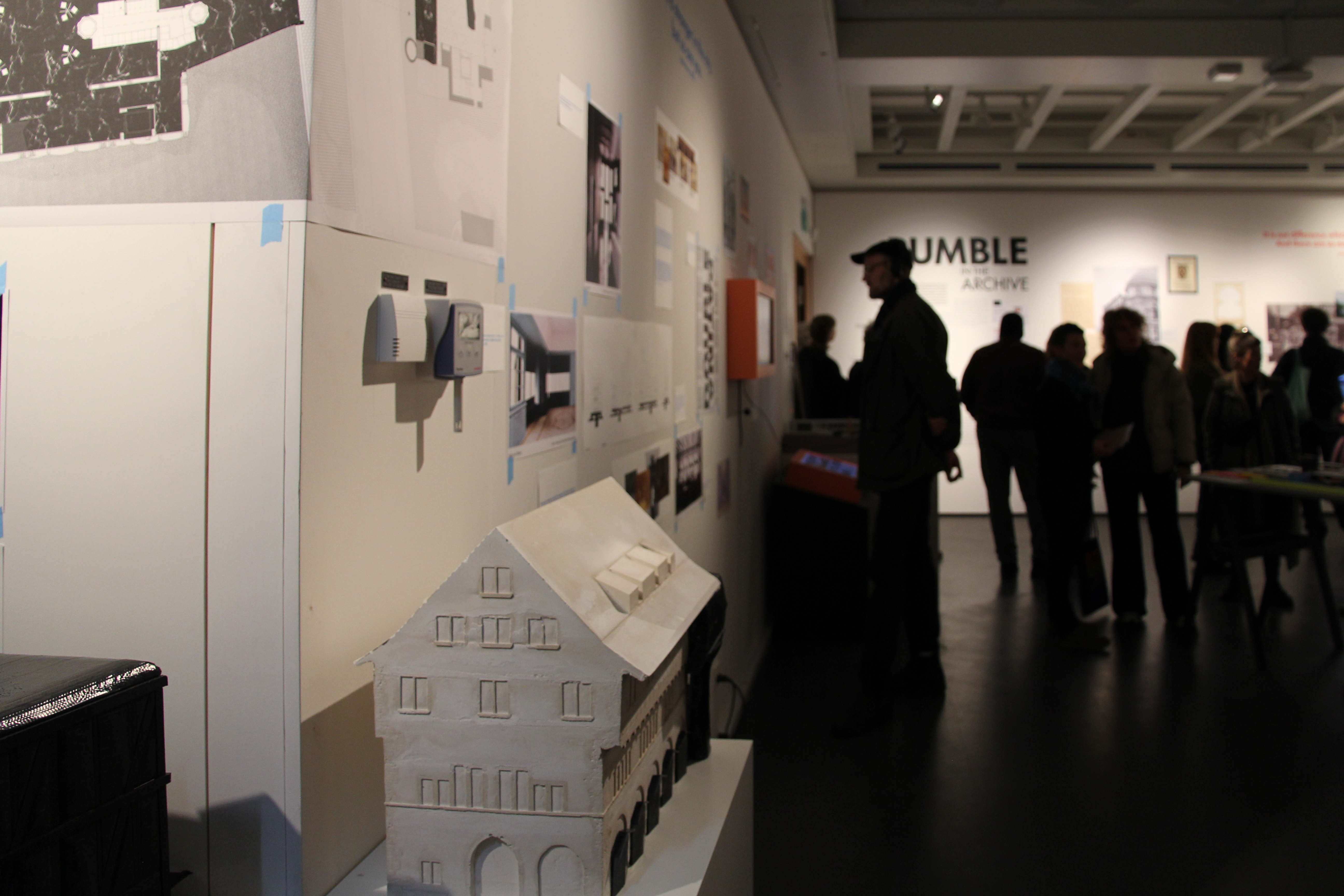
“Rumble in the Archive” explores a new strategy: the EMZ invites five members of diaspora and source communities of the collection’s objects to use the museum’s infrastructure and take over the space for ten months. Each collaborator proposes an intervention tackling a different topic and showcases their work in progress. At the kick-off event, the collaborators presented their ventures.
The Akebulan Association proposed what it calls a “radical approach”. Co-President Salwan Al-Zobeidy presented a video in which a Black man pretended to start a conversation with white people by touching their hair without permission. This cynical video reverses the roles of white and Black people, of perpetrators and victims. The association understands blackness as “a powerful act of resistance” (Alkebulan 2025). In the framework of “Rumble in the Archive”, Alkebulan members plan to create and display further provocative interventions to address everyday racism.
Eva De Souza, a Brazilian artist, actress, and activist, encountered the legacy of anthropologist Heinrich Hintermann while researching the EMZ’s archives. When examining his expedition in the Amazon (1924–1925), De Souza identified a river named after Hintermann on maps. In her rumble project, she questions the historical naming by proposing a renaming through a critical performative exploration. Throughout this act, the artist will reflect on the process of naming and renaming as a manifestation of colonial power and as a decolonising practice (De Souza 2025).
Salim Umar, an Afropean architect, considers Zurich’s architecture and its themes of belonging and alienation. His contribution to “Rumble in the Archive” engages with the Zurich guilds, privileged associations that shaped the city’s society and architecture. As a response to their exclusiveness, Umar developed a design for an Afropean guild house, pushing forward elements of alienation rather than inclusion (Umar 2025). By doing so, he names and points to the issues of discrimination, giving “the stranger in the city” a space (Umar n.d.).
studiyo filipino is a hub for Philippine intercultural discussions. Throughout its projects, the group addresses issues of discrimination and “false historical representations” (studiyo filipino 2025). Among other things, studiyo filipino fosters reconnecting with Filipino objects stored in museums. To rumble the EMZ, studiyo filipino engages with the museum’s Filipino collection. The group urges the EMZ “to open its Philippine collections to the public and uncover Zurich’s colonial ties” (studiyo filipino 2025).
Vinije Haabo is a linguist who hails from the Samara Maroon community in southern Suriname. During “Rumble in the Archive”, he is engaging with the Fi Pau, a particular object of relevance for the Samara Maroons, preserved in the EMZ collection (EMZ 2025). A comparable object in the Royal Dutch Collection is accessible only through a formal written request to the Dutch king, which entails a justification for one’s claim. This requirement privileges bureaucratic, text-based modes of communication and marginalises communities such as the Samara, whose knowledge practices rely mostly on oral tradition. Hence, they encounter difficulties accessing the museum objects, as their claims cannot easily be substantiated through written archival documentation. By foregrounding this tension, Vinije Haabo exposes how colonial power relations persist through institutional procedures.
To summarise, the five experts share an intention: they aim to scrutinise colonial histories and their continued influence on current cultural, social, and institutional structures. This aligns with the racial turn’s demands mentioned above of bringing in different perspectives to foster decolonisation and anti-racism (Kelly 2021, 37; 52; 104–105). I concur with Kelly (2021, 103–106) that structural change demands a reflexive and critical process. In various public settings, I observed recurring tendencies toward polarisation, in which people affected by racism often felt misunderstood – for instance, when discussants reduced racism to individual experiences, obscuring the broader structural conditions in which it is embedded. This difficulty in shifting the conversation to a structural level appears both latent and persistent. It may be explained by a general unease with remaining in discomfort, coupled with a limited vocabulary for reframing and addressing these issues (Kelly 2021, 46; 48–49). So, I ask: what skills and tools do we require to direct matters toward a critical conversation on a structural level?
“Rumble in the Archive” attempts to cultivate such tools through disruption, counter-archiving, and the deliberate unsettling of institutional routines. The five Rumble collaborators will shake up the archive by challenging existing collections and by creating an alternate ar-chive that reflects the views of marginalised groups. Fostering the BIPoC community and giving it a platform for its perspectives is a fundamental step toward structural change. How the con-versations will unfold and what the actors bring in is yet to be seen – will the rumble develop into an uneasy noise that contributes to the Swiss racial turn?
Sources
Alkebulan. n.d. “Alkebulan.” Accessed December 14, 2025. https://www.alkebulan-association.com
De Souza, Eva. 2025. “Eva De Souza.” Universität Zürich. Accessed December 9, 2025. https://www.musethno.uzh.ch/de/ausstellungen/rumble-in-the-archive/eva-de-souza.html
Ethnographic Museum University of Zurich. 2025. “Alkebulan Association.” Universität Zürich. Accessed December 9, 2025. https://www.musethno.uzh.ch/de/ausstellungen/rumble-in-the-archive/alkebulan.html
Ethnographic Museum University of Zurich. 2025. “Cordial Invitation. Kick-off ‘Rumble in the Archive’ 5 December 2025.” Universität Zürich. Accessed December 9, 2025. https://www.musethno.uzh.ch/en/Exhibitions/rumble-in-the-archive/Mailings/2025-11-27_programme-kick-off.html
Ethnographic Museum University of Zurich. 2025. “Eva De Souza.” Universität Zürich. Accessed December 9, 2025. https://www.musethno.uzh.ch/de/ausstellungen/rumble-in-the-archive/eva-de-souza.html
Ethnographic Museum University of Zurich. 2025. “Rumble in the Archive. Interventions on Postcolonial Zurich.” Universität Zürich. Accessed December 9, 2025. https://www.musethno.uzh.ch/en/Exhibitions/rumble-in-the-archive.html
Ethnographic Museum University of Zurich. 2025. “Salim Umar.” Universität Zürich. Accessed December 9, 2025. https://www.musethno.uzh.ch/de/ausstellungen/rumble-in-the-archive/salim-umar.html
Ethnographic Museum University of Zurich. 2025. “studiyo filipino.” Universität Zürich. Accessed December 9, 2025. https://www.musethno.uzh.ch/en/Exhibitions/rumble-in-the-archive/studiyo-filipino.html
Kelly, Natasha A. 2021. Rassismus. Strukturelle Probleme brauchen strukturelle Lösungen! Zürich: Atrium Verlag AG.
studiyo filipino. 2024. “Topics.” studiyo filipino. Accessed December 9, 2025. https://studiyo-filipino.ch/en/topics/
Umar, Salim. n.d. “An Architecture of the Stranger: Memory, Identity and the Practice of Belonging.” Accessed December 9, 2025. https://strangerinthecity.ch
[1] “Völkerkunde?museum – koloniales Erbe und Wege in die Zukunft” took place on 11 May 2023; “Alter Name – neue Zeit: ein Museum zwischen Gestern und Morgen” took place on 30 November 2023.
[2] An example for an experimental and cooperative approach is the Workspace Series. Visit the museum’s website for more information about current and past exhibitions: https://www.musethno.uzh.ch/de/ausstellungen/Vergangene-Ausstellungen/werkstattreihe.html