Dealing with Institutional Volatility: Food Production, Processing and Trade in South-Eastern Qazaqstan
Food is, without doubt, the most essential produce and commodity in any socio-economic configuration. It provides, on the one hand, humans with the necessary means of physical survival. At the same time, for a majority of the world’s population, it is a major source of income while also endow people with goods that can be exchanged as gifts or offered as acts of mutual hospitality. And, from the perspective of state authorities, sufficient food provision is indispensable for national security and legitimacy as well as a potential source of revenues, in case of surpluses.
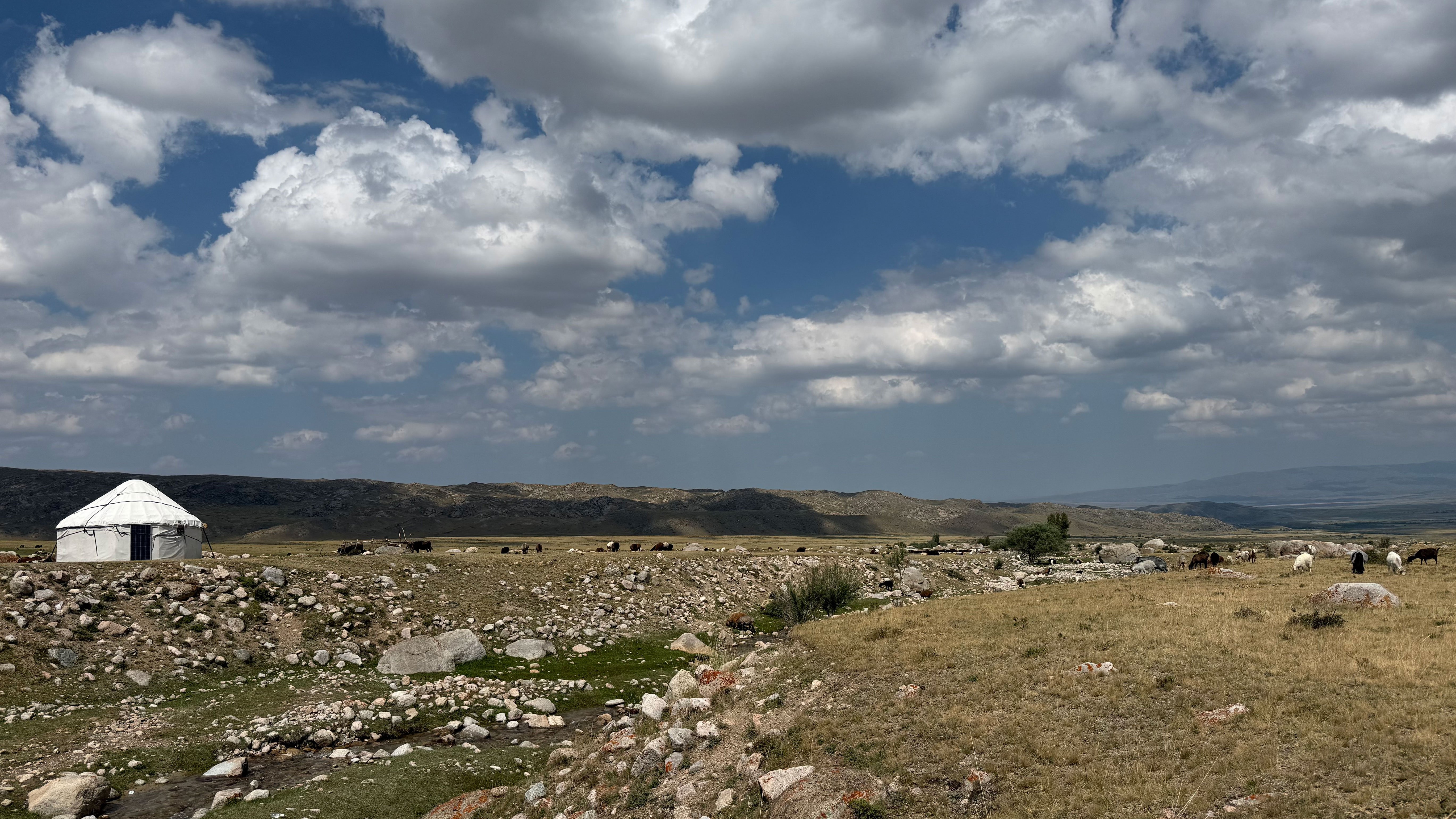
This project looks at food production, processing, trade and consumption as an interlinked complex in south-eastern Qazaqstan, or Jetisuw – the Land of Seven Rivers. Located in the heart of Central Asia, this is a rather advantaged region, due to its fertile soils, the availability of water, and the vicinity to major trade routes. As such, it is particularly suitable to study the booms and busts that have affected people since the end of the socialist regime. While recent decades have seen hardships and challenges of various kinds, they also created new opportunities and have resulted in the establishment of new hierarchies.
Focusing on rural households and petty entrepreneurs, the project investigates the visible and invisible institutional configurations that form the framework within which individuals make their strategic decisions. It does so by comparing the challenges and chances people face across sectorial differences, from primary to secondary and tertiary. Apart from the respective institutional setting, such as property rights and forms of contract, this includes aspects of technological innovation, worsening ecological conditions due to climate change as well as socio-political re-configurations, creating winners and losers along the way.
Team
Aliya Bolatkhan, PhD student
Aliya Kashaganova, PhD student
Chekhros Kilichova, PhD student
Iuliia Koreshkova, postdoctoral researcher
Gulnaz Tulenova, PhD student
Funding